Measurement instrumentation is critical in a wide range of industries, such as industrial automation, medical…
Electroless nickel plating and electrolytic nickel plating are two different processes for coating a surface with nickel. (see in-depth Wiki and on galvanic corrosion)
They differ in the process that allows the nickel layer to be deposited on the object.
The common element of chemical and electrolytic nickel plating is the raw material: nickel. However, the processing, results and subsequent areas of application are different.
Electroless nickel plating
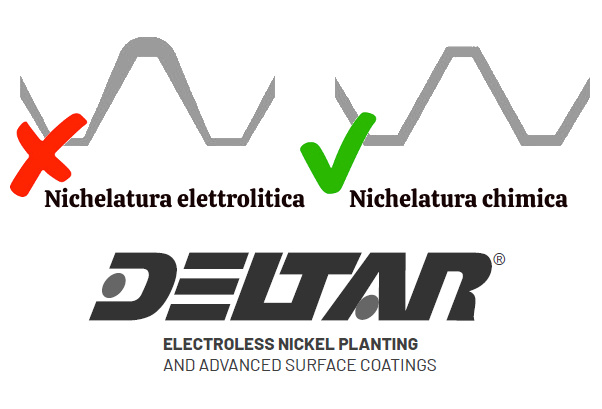
Electroless nickel plating, also known as electroless nickel deposition, is a surface coating process that occurs solely by chemical means, without the use of electricity. The machining process by chemical means allows the nickel coating to be of uniform thickness throughout the part. This electroless nickel plating process provides corrosion and wearresistance. In addition, it is anti-friction, that is, it has the property of reducing friction between two surfaces in contact with each other. Chemical nickel plating is applicable to objects of all major alloys: aluminum, iron, copper, and titanium, and is suitable for many areas of application.
How does it work?
Chemical nickel plating is done by a chemical reaction to deposit a desired, homogeneous layer of nickel on an object or part of an object. Processing can be divided into two basic stages: pretreatment or degreasing where it is essential to subject the part to be coated to three different degreases: chemical, anodic, and cathodic . These three absolutely different processes give the surface essential characteristics for obtaining a defect-free deposit, a quality essential for obtaining optimal and compliant deposition.
Of course, prior to the process, preparation actions can be carried out in accordance with the required specifications, which may include sandblasting, cleaning, protection and/or masking.
Throughout the process and at its conclusion, special checks are carried out to assess the quality of processing and finished product according to Astm, Iso etc. specifications.
The electroless nickel plating process is suitable for coating many objects, even those with complex shapes. Specifically, electroless nickel plating is applied in different contexts: mechanical, chemical, pharmaceutical, construction, oil and gas, aerospace, nuclear , automotive, military , logistics and transportation. In addition, electroless nickel plating is optimal in precision mechanics because it combines multiple advantages: precision, thickness uniformity, high hardness, and resistance to wear and corrosion.
Electrolytic nickel plating
Electrolytic nickel plating is a galvanic treatment that is performed to coat a metal object with nickel. Specifically, it is an electrodeposition process: the part to be coated is connected to the negative pole and acts as the cathode, while nickel bars or plates are normally used as the anode, dissolving to replenish the nickel in the bath.
How does it work?
In electrolytic nickel plating, the part is immersed in specific baths containing nickel salts: the electric current drives the nickel ions towards the surface of the part, where they are deposited as metallic nickel. This produces a deposit with a glossy, often bright appearance.
The process of electrolytic nickel plating is mainly used in thedecorative field to give a silvery metallic appearance. It is usually combined with an underlying copper coating for the purpose of increasing adhesion and giving a shiny, glossy appearance. It has medium hardness and modest corrosion resistance.
Electroless nickel plating: what is it used for?
Chemical nickel plating is mainly used in technical fields and has many advantages:
- Corrosionprotection: nickel layer preserves against corrosion. From simple oxidation generated by weathering to oxidation induced by corrosive acids such as sulfur dioxide SO2 Kesternich test.
- Wearresistance: nickel significantly increases wear resistance ,thereby increasing the service life and longevity of machinery and tools.
- Homogeneous deposition over the entire surface thus avoiding both the tip effects typical of electrolytic deposition
- Appearanceimprovement: electroless nickel plating improves the aesthetic appearance of an object , making it shinier and brighter.
- Increase the hardness up to values of 1000HV
- Reduces friction
Deltar’s electroless nickel plating: the process
Deltar is the world’s largest company in the electroless nickel plating market, specializing in high phosphorus electroless nickel, the codeposit of Electroless Nickel-Silicon Carbide (NiSiC) Delsic and Nickel-PTFE. Its strengths are: speed,excellent quality andhuge production capacity.
In fact, Deltar has facilities not only consisting of very large process tanks but also everything that facilities of that size need: from furnaces for subsequent heat treatment to lifting and handling equipment that support weights and sizes of the processed parts themselves .
Dedicated blasting and protection departments , areas for pre- and post-production inspection and storage as well as areas prepared for inspection by internal and external inspectors.
All this means that being a leader in the production of extra-size parts ensures that all required international standards are met, assuring the market of the highest quality products with a quality not otherwise obtainable. Working according to international standards requires that the whole company be developed according to the size and weight of the part to be processed, which cannot be reduced to the simple large tank.
So much so that Deltar guarantees machining for objects up to 58 tons, with dimensions that can reach over 5 meters in length and 2.6 meters in diameter
Each process involves treatment of excellence, with a strong focus on quality and safety. Every piece processed by Deltar is certified, from start to finish.
Deltar is an Industry 4.0, where the integration of newproduction technologies improves working conditions, increases productivity and the quality of plants.
Related Posts